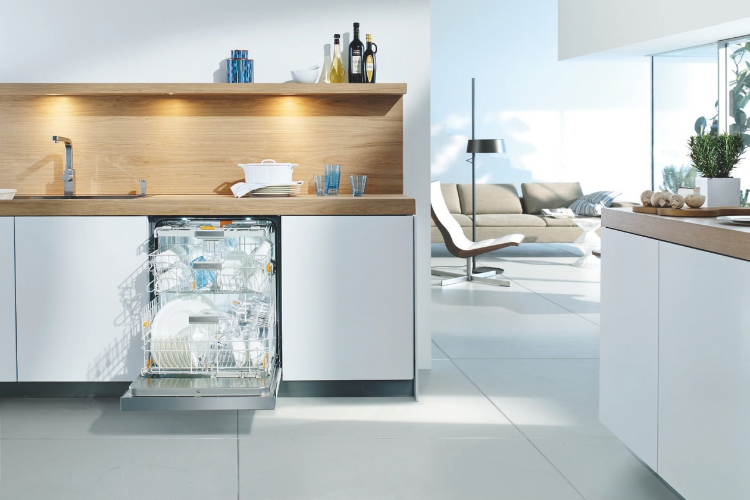
What sets Edmonton's water apart from a lot of other cities isn't visible until it starts working against a dishwasher, then it shows up everywhere at once: cloudy glasses, chalky buildup on the racks, and a machine that seems to run less effectively than it did when it was new. None of that is a defect in the appliance. It is a water chemistry problem, and understanding it is the first step to actually fixing it rather than cycling through detergent brands hoping one finally works. Avenue Appliance can help sort out what's actually going on and point toward home appliances in Edmonton built to handle it. Visit us today.
Why Your Glasses are Cloudy No Matter What Detergent You Use
Cloudy glassware is one of the most common dishwasher complaints, and it is almost never about the detergent itself. That filmy haze is mineral deposit, mainly calcium and magnesium, left behind as hard water evaporates off glass surfaces during the drying cycle. Switching detergent brands rarely clears it up because the detergent was never the source of the problem. Rinse aid helps reduce spotting by encouraging water to sheet off rather than bead and dry in place, but on genuinely hard water, rinse aid manages the symptom rather than removing the cause.
How Edmonton's Water Hardness Actually Affects a Dishwasher
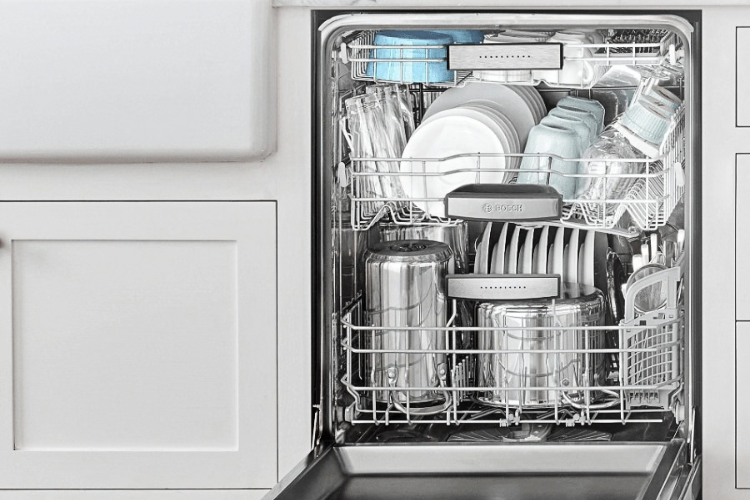
Edmonton's municipal water is classified as hard, generally testing in the range where total hardness runs from roughly 150 to over 180 milligrams per litre as calcium carbonate, based on EPCOR's public water quality reporting, with some months trending into what water treatment professionals call very hard territory. EPCOR's own November 2024 water quality data put total hardness at an average of 181 milligrams per litre for the month, with a year-to-date median of 177 and a range between 145 and 218. On the standard hardness scale used across the water treatment industry, water in the 121 to 180 milligram per litre range is considered hard, and anything above 180 is very hard. Inside a dishwasher, that mineral load builds up on heating elements, spray arm nozzles, and interior surfaces over time, which is what eventually shows up as reduced cleaning performance even when the machine itself is working exactly as designed.
What Built-in Water Softening Does and Does Not Solve
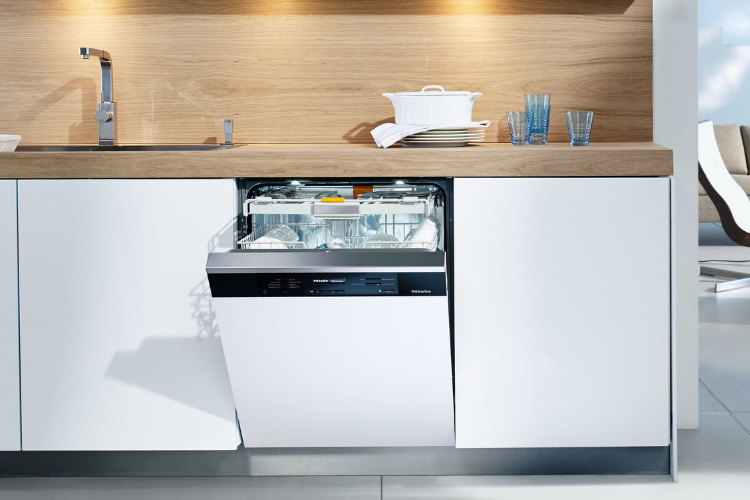
Many higher-end dishwashers include a built-in water softener that treats water right before the wash cycle, and this is one area where a premium brand earns its place in a hard water home like Edmonton's. Miele dishwashers let the water hardness setting be adjusted to match a home's actual water supply, rather than relying on a fixed factory setting. Bosch dishwashers pair sensor-based wash technology with glass protection features that continuously regulate hardness during the cycle specifically to prevent the etching and clouding that hard water causes on glassware. ASKO dishwashers, part of Avenue Appliance's brand roster alongside Miele and Bosch, include a built-in water softener as a standard feature rather than an upgrade. What none of these systems do is soften the water anywhere else in the home. A dishwasher's internal softener treats only the water entering that one appliance, so it has no effect on a washing machine, a water heater, or the pipes and fixtures throughout the rest of the house. Getting the hardness setting dialed in correctly at setup also matters. This is exactly the kind of detail Avenue Appliance's showroom staff can walk through at the time of purchase, since Avenue is an authorized dealer for every brand it carries.
Choosing Detergent and Rinse Aid for Hard Water
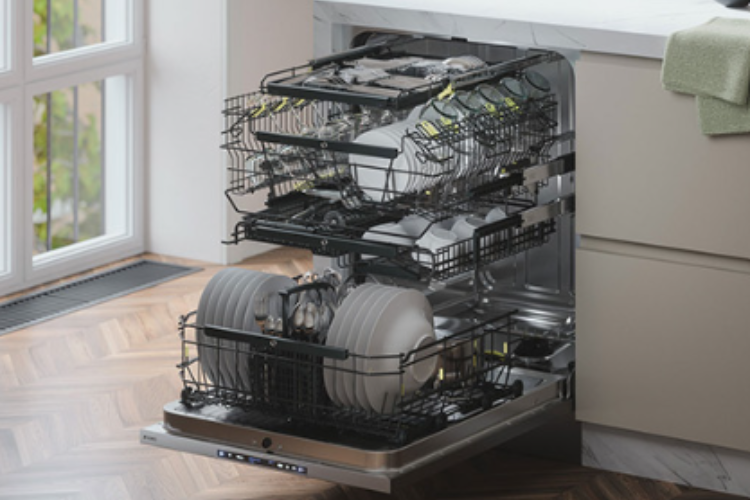
Detergent choice matters more in hard water than most people expect. Formulas with added water softening agents, sometimes labelled for hard water use, are built to bind minerals before they can redeposit on dishes, which makes a real difference over gel or basic tablet formulas that were not designed with mineral-heavy water in mind. Rinse aid is not optional in a hard water home. It should be topped up consistently rather than treated as an occasional extra, since running dry is one of the fastest ways cloudiness and spotting come back. For homes shopping for home appliances in Edmonton, checking whether a dishwasher model includes an internal softener and pairing it with a hard water detergent and rinse aid combination is a practical starting point before assuming the appliance itself needs replacing.
When The Real Fix is a Softener Upstream
For a household seeing hard water symptoms across multiple appliances, not just the dishwasher, the more effective fix is usually a whole home water softener installed where the main water line enters the house. This treats the water before it reaches the dishwasher, washing machine, water heater, and every faucet, rather than relying on a single appliance to manage the problem on its own. It is a bigger investment than a bag of dishwasher salt, but it addresses the actual cause instead of one symptom. Anyone noticing hard water issues in more than one place in the home, not just cloudy glasses, is usually looking at a case where an upstream softener will do more than any detergent switch or dishwasher upgrade on its own.
Troubleshooting the Symptoms Most Homeowners Notice First
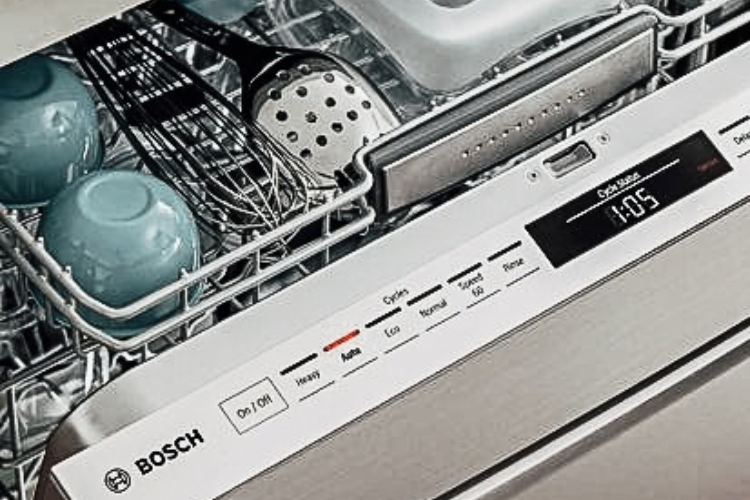
A few patterns show up consistently in hard water homes and are worth checking before assuming the dishwasher is failing. White chalky spots on glassware and cutlery point to mineral deposit rather than a detergent problem. A cloudy film that will not wipe off with a cloth, only with a vinegar rinse, is a classic hard water sign rather than an appliance fault. Reduced water pressure inside the machine over time often traces back to scale buildup on the spray arms rather than a pump issue. And a persistent chalky residue on the interior tub walls, even right after a cycle, usually means the internal softener setting needs adjusting or the salt reservoir needs attention rather than the machine needing a service call. Working through these symptoms in order usually points to the real cause faster than replacing detergent after detergent.
If a dishwasher at home is showing these symptoms and the appliance itself turns out to be the issue, the showroom at Avenue Appliance is a good place to see Miele, Bosch, and ASKO models built with Edmonton's water in mind, side by side, before making a decision. Visit the showroom on Whyte Avenue to talk it through with the team.
Frequently Asked Questions
Is Edmonton's tap water actually hard, or does it just feel that way?
Yes. EPCOR's water quality reporting shows Edmonton's total hardness typically running in the 145 to over 200 milligram per litre range as calcium carbonate, which places it solidly in the hard to very hard classification used across the water treatment industry.
Will switching detergent brands fix cloudy glasses?
Usually not on its own. Cloudiness is caused by mineral deposit from hard water, not the detergent formula, so a hard water specific detergent paired with consistent rinse aid use helps more than brand switching alone.
Does a dishwasher with a built-in softener soften water for the rest of the house?
No. A dishwasher's internal softener only treats water entering that one appliance. It has no effect on a washing machine, water heater, or the rest of the home's plumbing.
How do I know if I need a whole home water softener instead of just fixing the dishwasher?
If hard water symptoms show up in more than one place, such as spotted glassware, dry skin after showers, and scale on faucets, a whole home softener addresses the underlying cause rather than treating one appliance at a time.
Is a dishwasher with hard water symptoms actually broken?
Not necessarily. Cloudy glasses, reduced spray pressure, and interior residue are common hard water symptoms even in a properly functioning machine. It is worth ruling out water chemistry before assuming the appliance needs to be replaced.